Contact Us
+66 96-551 9996
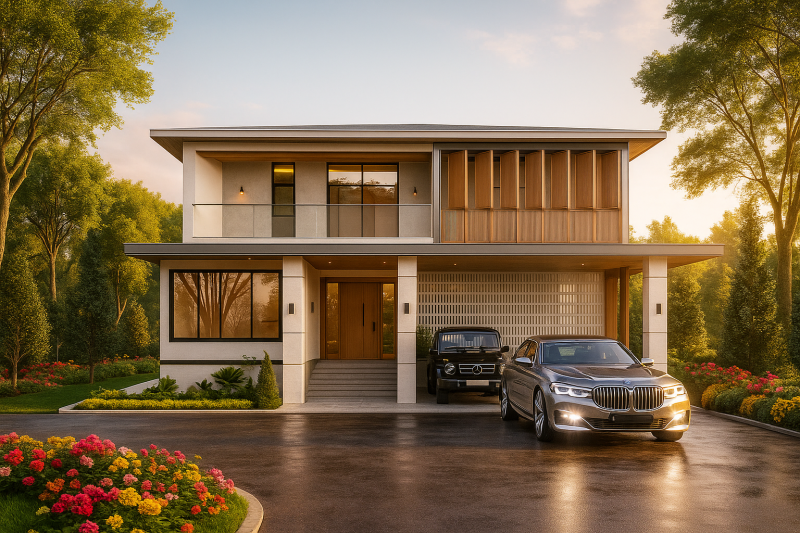
Smart Home Prewiring in Chiang Mai: Plan Before Finishes
22 August 2026Smart and Eco Home Design: Comfort, Efficiency and Better Use of Space
A smart and eco-friendly home is not defined by gadgets alone. The most effective approach starts with the site, orientation, shade and daily routines, then adds technology where it improves comfort, control or energy use.
Begin with passive design
Plan roof overhangs, shaded openings and room positions around the sun and prevailing wind. Cross-ventilation can support comfort when outdoor air is suitable, while insulation and reduced heat gain help the home remain comfortable when windows need to stay closed.
Use space according to real routines
List the activities that happen every day and separate essential spaces from occasional ones. Flexible rooms, built-in storage and shared circulation can reduce wasted floor area without making the home feel small. For remote workers, provide a quiet workspace with suitable daylight, electrical outlets and data connections.
Add technology with a clear purpose
Useful systems may include zoned lighting, temperature control, energy monitoring, door and water-leak sensors, and scheduled equipment operation. Choose products that can still be operated manually and consider compatibility, cybersecurity, replacement parts and after-sales support.
Plan energy and air quality together
Efficient air conditioning, shading and a well-considered building envelope can reduce cooling demand. If solar power, electric-vehicle charging or air filtration may be added later, reserve suitable electrical capacity and service space during design.
Make maintenance straightforward
Equipment should remain accessible for inspection, cleaning and replacement. Document product models, warranty information and basic operating instructions for the homeowner.
Design a home around your lifestyle
Browse our house designs, view the Greenery portfolio, or contact our team to discuss a custom home in Chiang Mai or Lamphun.
Book a free initial consultation with an architect. The consultation does not include free architectural drawings.
Smart Home Prewiring in Chiang Mai: Plan Before Finishes
A smart home often becomes expensive for the wrong reason: devices are chosen after ceilings, walls and cabinetry are finished. Starting with routines and infrastructure keeps the system useful now and leaves sensible paths for upgrades.
Frequently asked questions
What should be planned first?
Power, data, conduits, equipment locations, sensors and service access.
Must every device be chosen now?
No. Good infrastructure can preserve future options.
Is consultation free design?
No. It clarifies needs but excludes free drawings and house design.
Plan the next conversation
Review our design and construction service, see selected projects, or contact the team to book a free initial architect consultation. This excludes free drawings or house design.